Strategic coaching that helps boost confidence and deliver results to anyone, even the slowest of learners.
Based on the IKO progression used by kite schools worldwide - each stage builds on the last, at your pace.
Honestly? I think that question is almost unfair to ask you to answer before we've even started. Putting a number on it puts pressure on you to perform inside a deadline that has nothing to do with how you actually learn.
So instead, let me ask you something back: why do you really want to learn this? What's the feeling underneath it — the one that makes you think this sport is for you? Once I know that, we can build the work around your actual goals, and it stops mattering how many sessions it takes, as long as it eventually does.
There's a common myth that everyone should be riding in three days. In reality, maybe 10-15% of people genuinely learn that fast — and yes, I've had a student get it in a single day. But most people need more time than that, and there's nothing wrong with that at all. Everyone learns at a different speed, everyone carries different fears, and we simply work through all of it together, at whatever pace uncovers your progress properly.
My promise: I will always give you the best coaching I can, with the conditions we have, for as long as it takes.
For independent riders ready to push past the basics - coached one-to-one, at whatever skill you want to build next.
Video Mini Session →The first few years after learning to kite are often spent stuck in the same forest - especially if you can only ride once a month or so. Progress crawls, not because you're not capable, but because the real basics of kiting - edge control and managing the power from the kite - never got locked in properly. Without that foundation, everything advanced stays out of reach.
Whatever you're chasing - a transition, your first jump, rotations, or anything else - I can help you get there. But first, I want to understand what you're actually trying to achieve. A higher jump? Smoother control? Less fear? That's where we start, because most riders share the same handful of common mistakes and shaky basics, and fixing those is what actually saves you the years. That includes skills people tend to skip entirely - self-rescue being the obvious one, and an absolutely necessary one to have.
My goal: help you skip the years of just riding back and forth, and get you building the skills you actually want.
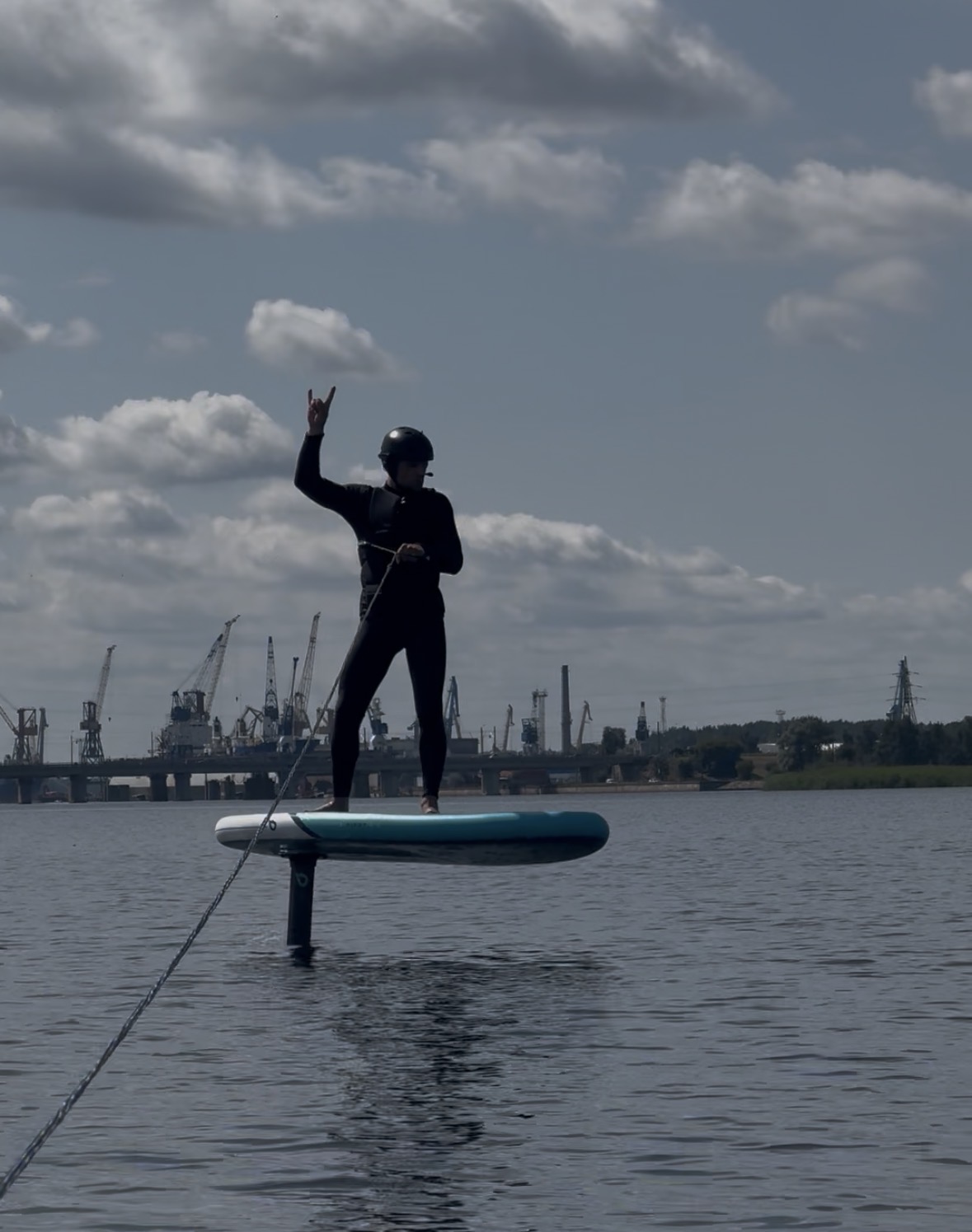
Wingfoiling is one of the fastest sports to pick up on the water - most riders are flying independently within a few sessions on the simulator.
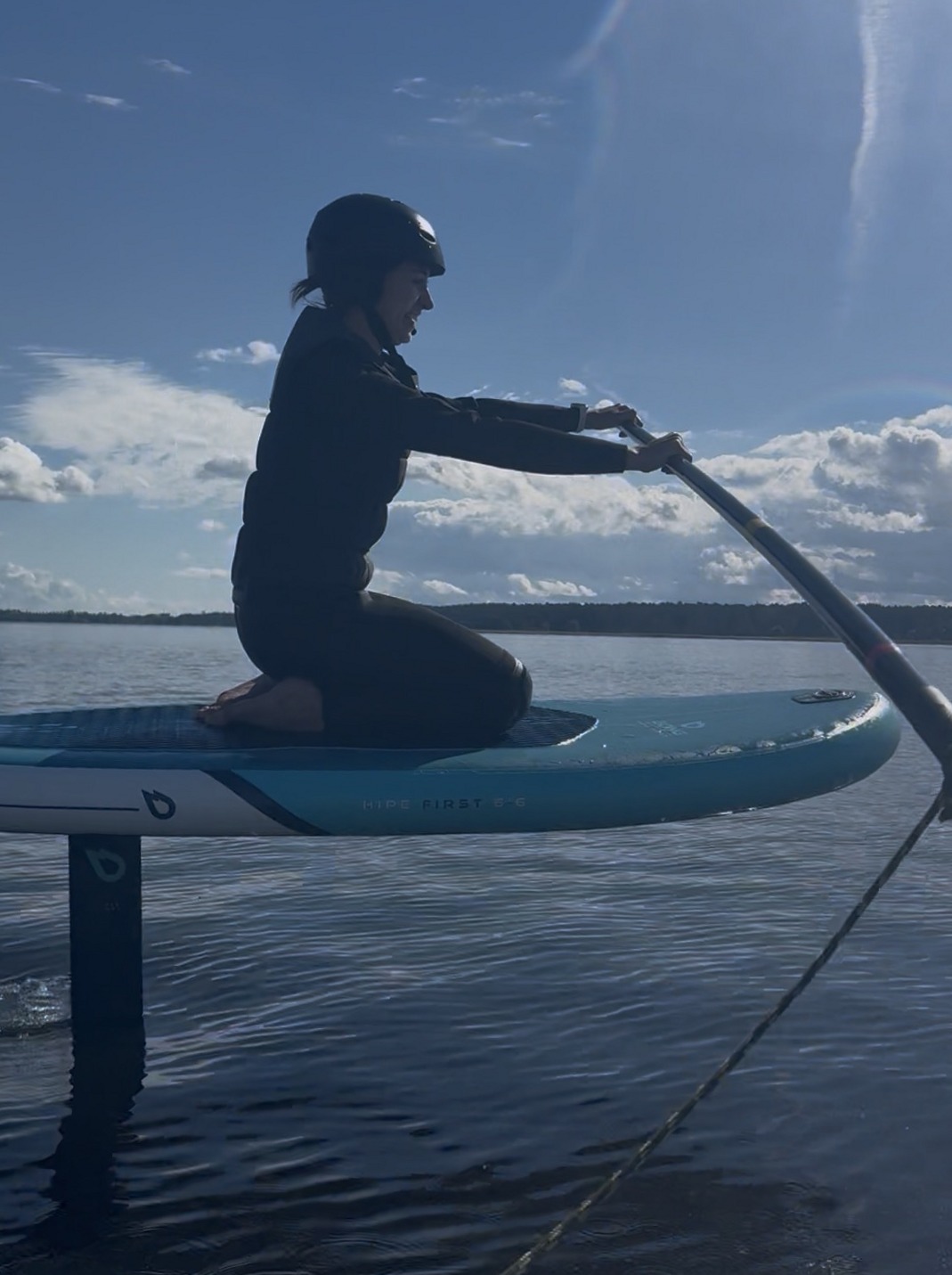
But here's the good part: for wingfoiling, we have the foil simulator to help. It lets us simulate near-perfect conditions, so I can walk you through it step by step, slowly and gently, building every basic skill you need before you ever have to take the pull from the wing on your own.
Honestly, when I first learned to foil, it was a nightmare. It took me a long time to get comfortable, and there was a real stretch where I doubted I'd ever get it. Once it clicked, I realized how much easier that whole process could have been with the right guidance — and that's exactly the help I'm trying to give you now, so you don't have to go through the version of it that I did.
My commitment to you: the best possible foiling coaching I can give, step by step, for as long as it takes to get you flying.
For independent riders ready to push past the basics - coached one-to-one, at whatever skill you want to build next.
You'll build all of it here - jibes, toeside riding, pumping the foil for speed, the upwind tack, even the flashier tricks if that's what you're after. But ask any wingfoiler who really lives for this sport, and they'll tell you it's all in service of one thing: wave riding. Everything else is just the road to get there.
Next to kiteboarding, wingfoiling can look almost boring from the outside - no big jumps, no visual drama. But the moment you catch your first wave, that changes completely. It becomes something close to addiction, a feeling that's genuinely hard to explain to anyone who hasn't felt it themselves.
Most people don't realize what wingfoiling can actually give you. Once you catch a wave, you don't need the wind's power anymore - you're riding the swell itself, the raw push of the ocean. And that changes everything about how you have to think.
You can't see thirty or forty meters ahead on a wave. You get maybe three, four, five meters of path opening up at a time, and you constantly adapt to it - not unlike how we plan our own lives. We like to imagine we can see ten or twenty years ahead, but really, all we ever have is today, tomorrow, maybe next week.
When you're really in it, there's nothing your mind is doing except being there. You have to be - the moment you're not, the wave is gone, and you're back to hunting for wind to start again. But stay present, stay with it, and a single wave can hold you far longer than seems possible. I know one rider who once stayed on a single wave for two hours straight.
That feeling has a name - flow state - and it's the whole reason I do this. Read more about it here →
or kitefoil, or pumpfoil, or parawing, or downwind swell riding
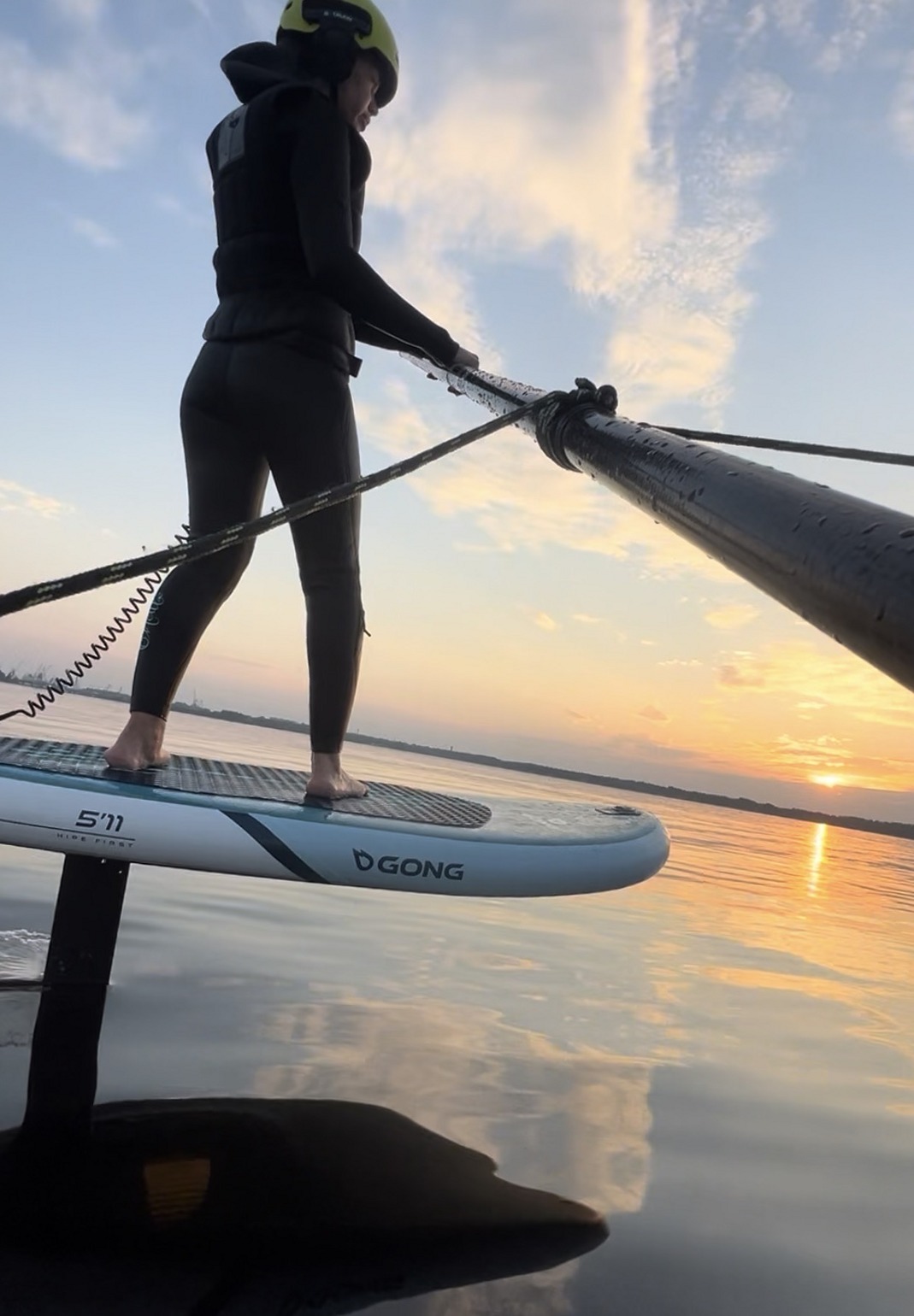
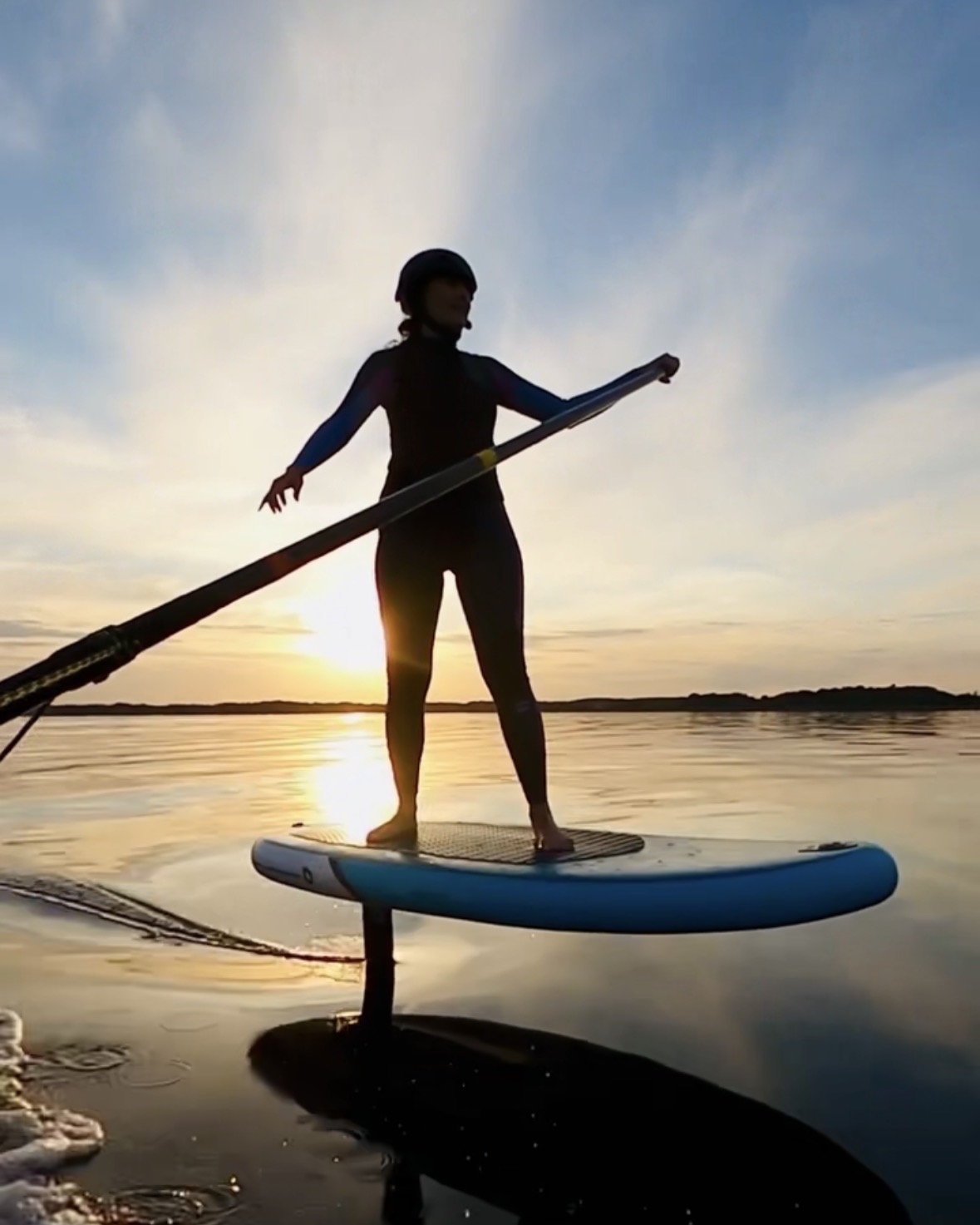
A fixed boom off the side of the boat tows you at a precisely controlled speed — no power source to manage, just board feel and balance. Lessons run with radio helmets included, for 1 or 2 people, so you master steering and pumping in a controlled environment with full radio support. Most riders are flying independently within a session or two.
A calm word in your ear, right as you need it — never a shout across the water. Bring a friend and all three of us share one live channel.


Perfect for all wingfoil and kiteboard needs — boat-supported learning, flat water, and upwind delivery, just outside Riga. Warm showers, a changing room, and parking all on site.
Foiling has so many levels, and everyone climbs that ladder at a different speed. My job is to organize each next step of your foiling journey, so that every lesson brings something new and some real progress.
Here's how I'd measure a good session: by the end of it, honestly ask yourself if there was any progress today. If the answer is yes - no matter how small - your day was a success. Small progress, stacked over time, is what actually builds the bigger picture. You can't rush your own progress. It's unique to you, because every single person is different.
Every stage builds on the last, at your pace, on the boat-towed simulator - some riders move through it fast, some need more time, and both are completely fine. What matters is that by the end, you're prepared for what real conditions will throw at you.
Here's the interesting part: you feel flow state the moment you get up on the simulator - day one, first time standing. Your focus locks in completely, constantly reading your flight height so you don't go too high or too low, and you simply can't stop paying attention to it. It's the same feeling wave riders chase for years, except on the simulator, it shows up almost instantly. More on why that matters →
You'll get a feel for the foil's lift and balance at low, controlled speed - then learn your first turns by pulling toward the boat or pushing against it. Angling the foil this way builds pressure and stability you'll rely on for every stage after this.
Building the stamina and rhythm to pump the foil while still on your knees, before your legs take on the extra work of standing.
Time to stand - weight forward toward the nose to keep lift manageable while you get used to being upright on a flying board.
Shuffling your feet and shifting position on the board, learning to use your knees to temporarily shift weight - this is how you feel your way toward your own right position.
I have a simple trick to help you find your own perfect foiling stance - once you feel it, you'll know exactly what I mean, and it becomes the foundation for everything else.
Engaging the foil and board through hip movement alone - a subtle shift that lets you steer without needing big, obvious body movements.
Think of it as training wheels for the foil - it slows the maneuverability and adds drag, so you can safely build skills before things get twitchy.
Once you're comfortable, we take the training wheels off and move to smaller-litre boards for more maneuverability - a noticeably different feel each step down.
Using a stick extension on the boom to fly one-handed - the foundation skill everything else in this tier is built on.
Pumping through the stick to trace an oval shape with the boom - each back-leg pump generates power, and releasing the stick to push with your front foot matches your rhythm to a wave's own energy.
Simulator skills only count once we combine them with real wind - gusts, waves, lulls, and everything in between. Skip this step and none of it transfers.
Controlling the wing itself - bending and extending your front and back hand, launching it overhead and bringing it back down kite-style, and recovering quickly if a wingtip catches the water, using your hips to regain stability.
The next level - not required for basic wingfoiling, but essential if you want to start riding waves.
Towed on a rope behind the boat, catching small waves and learning wave anatomy - high lift on the face, a vacuum-like drop on the back - so you can match the wave's energy and absorb more of it through your hydrofoil.
A sharp, aggressive turn against the load produced by the boat's own weight - brutally effective training for loading up a pop and cleaner right turns, and for toeside riding once you take it away from the boat. Extremely important if you're heading into kitesurfing wave riding and aggressive foil turns on a wave - this is how you find a massive right or left turn, depending on your stance, with real progress in a very short time.
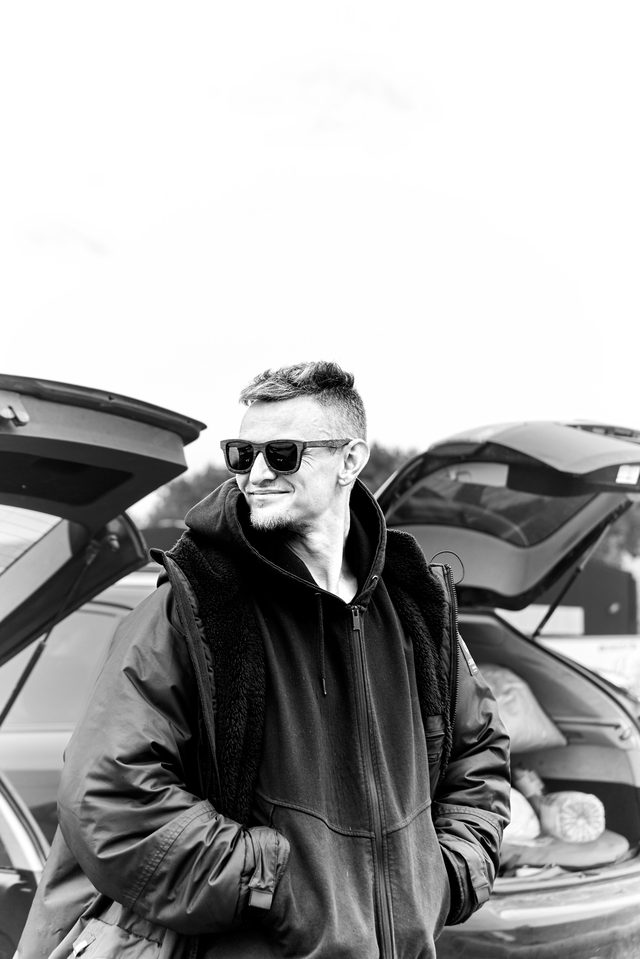
He brings that same strategic, root-cause approach to every session — find precisely what's holding you back, then build the fix so it sticks.
Ugis learned to kite on the Latvian coast in 2012, and spent three years riding it before deciding to coach full-time, starting in 2015. From there the passport got busy: a season in Vietnam, then Greece, back to Vietnam for another season, then Kenya, Panama, and New Zealand — coaching kitesurfing wherever the wind was good, before returning home to Latvia to fly people at Aerodium's wind tunnel, and eventually into the wingfoil simulator.
Before all that, he spent years working in IT.
"Instructor Uģis knows how to explain and teach seemingly impossible things simply, calmly and understandably — even to not very gifted students. Progress every time."
"Definitely the best kitesurfing and foiling instructor. He will get anyone to the result. Great communication, great equipment, 100% positive emotions for everyone."
"If there is anyone who can teach anyone (yes, anyone) how to fly over water, it is definitely Uģis. Professional, patient, tolerant and 100% into what he does."
"Such an amazing experience! Went from zero to hero in just a few sessions and loved every second of it! The instructor is amazing and the location is perfect! Recommend it 15/10!"
"Inventory is included in the price, with the option to rent extra gear for comfort and safety if you don't have your own. Everything's thought through and provided — and somehow Ugis still manages to capture it all on video while coaching."
"One word — EPIC!!! Everything was epic: the feeling of flying, the instructor, the atmosphere and the thoughtfulness of the whole learning process."
When the Gulf of Riga goes quiet for winter, I run one small, fully tailored camp in Vietnam — wingfoiling, kiteboarding, and surfing, coached by someone who knows this wind personally, not off a forecast app. No fixed itinerary: it's shaped around your level, your goals, and what you want the trip to feel like.
Watersports sit at the core, but the days around them can go as far as you like — yoga, a sailing outing, a visit to a working fisherman's village, motorbike rides along the coast, and food I actually know is good, not what shows up first on a map. When the wind drops, I take the group on a tour to a waterfall I've kept to myself for years — I won't say where it is, that's part of what makes it worth the trip.